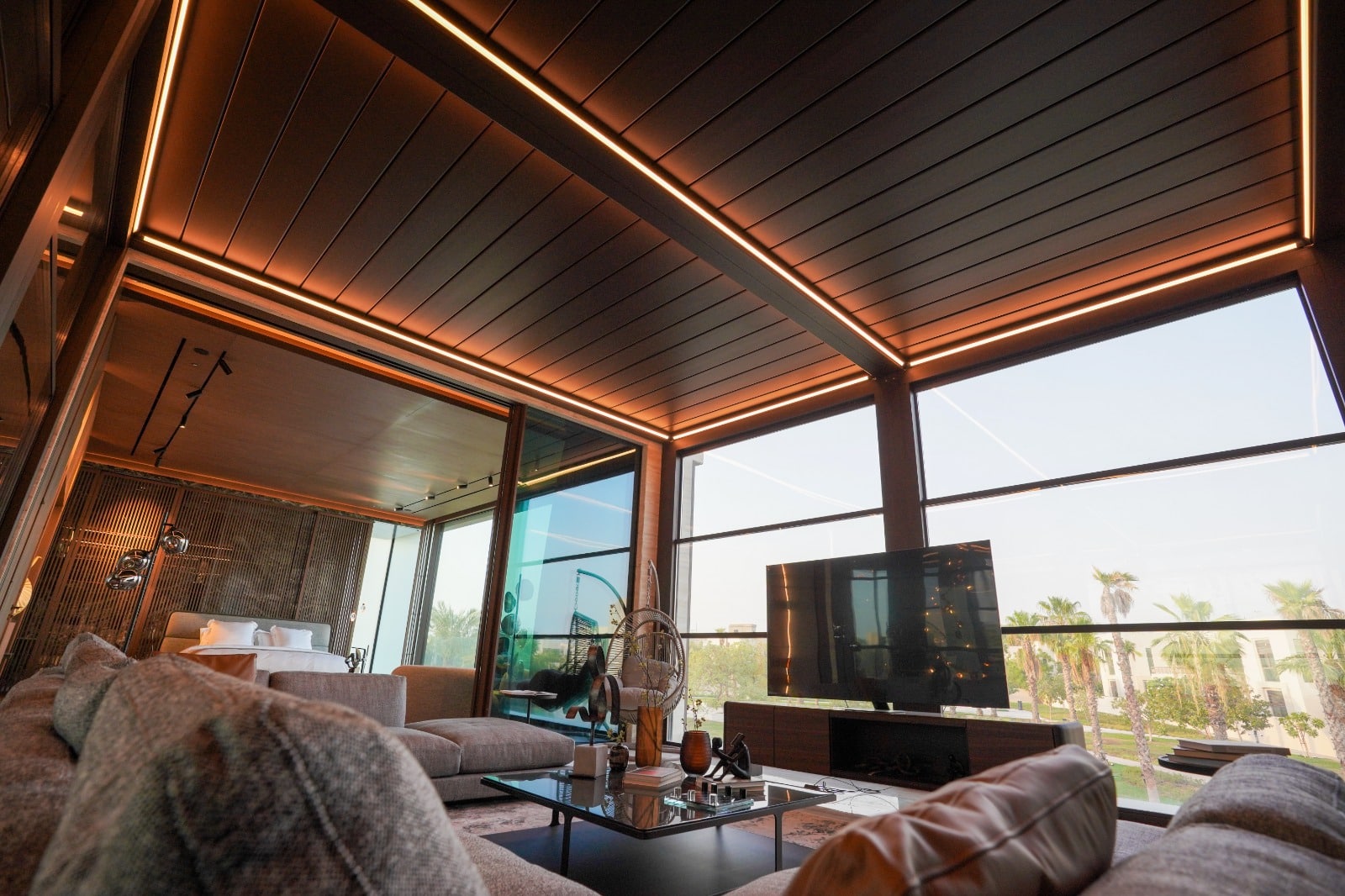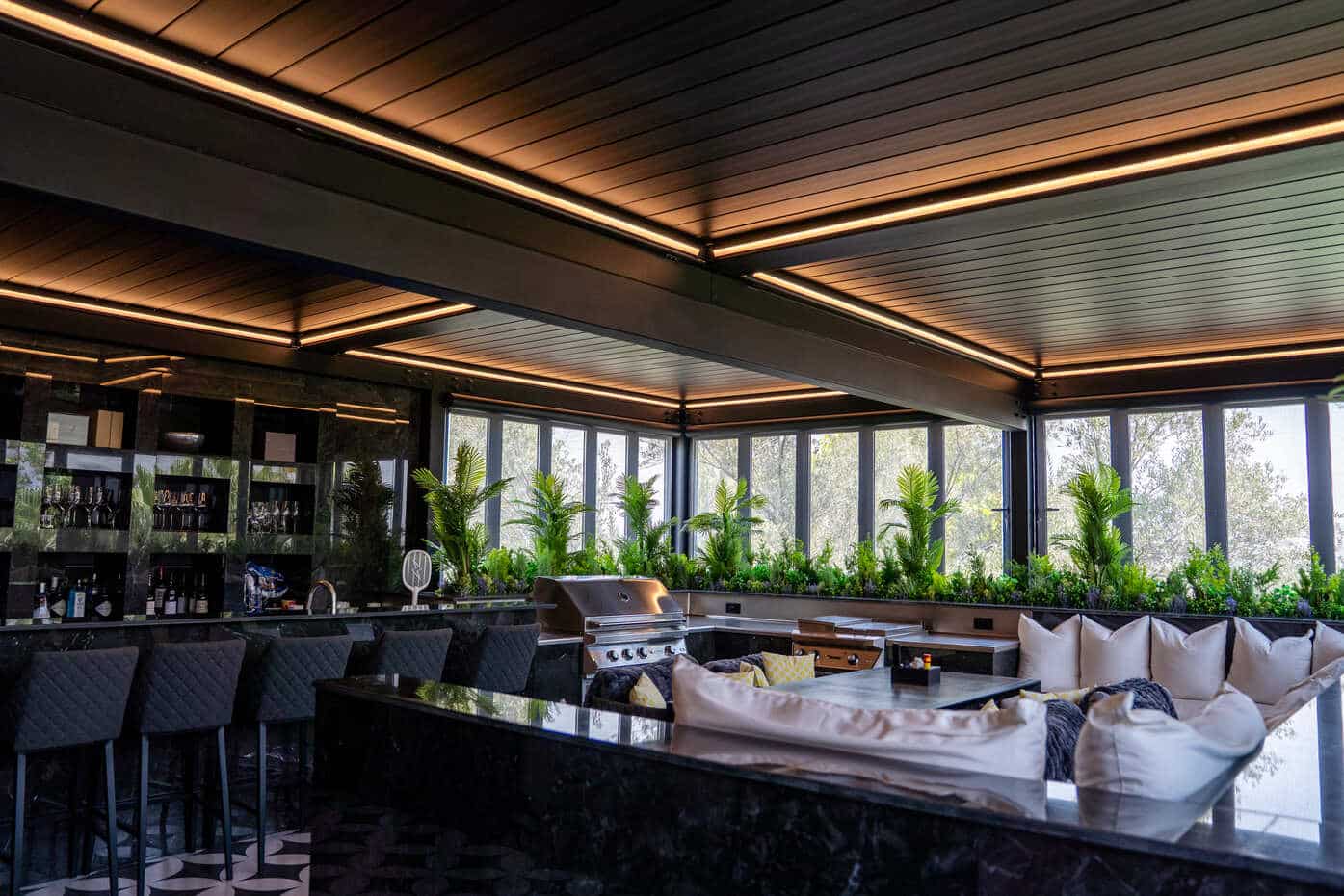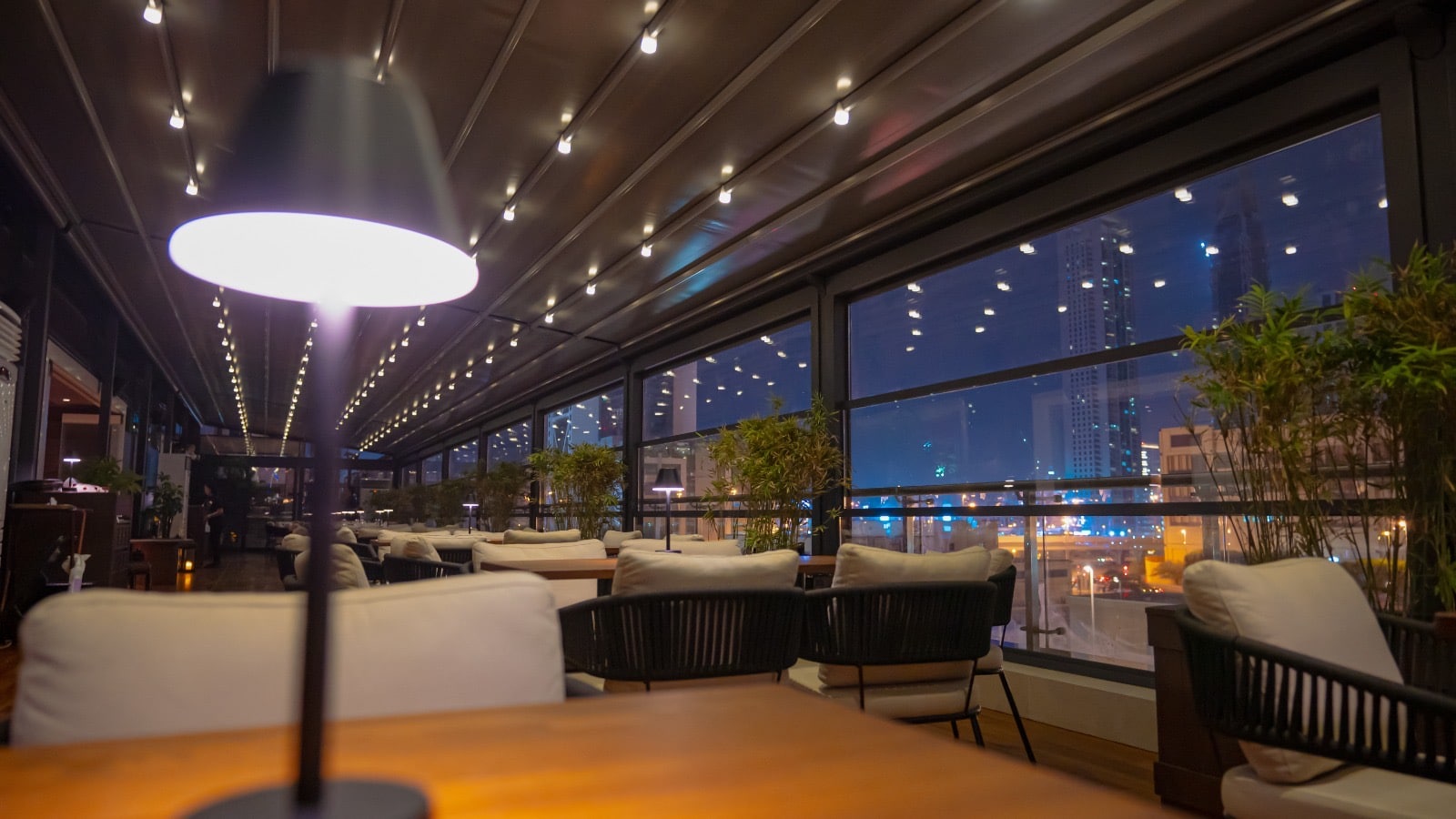
Rooftops offer one of the greatest opportunities to expand usable outdoor space. Whether for a luxury villa, restaurant, hotel, café, or commercial building, a rooftop can be transformed into a comfortable area for dining, relaxation, or entertainment with the right outdoor shading solution.
However, rooftop shading projects require much more than selecting a pergola. Because rooftops are fully exposed to environmental conditions, careful planning, engineering, and material selection are essential to ensure long-term performance and safety.
Here are the most important factors to consider before installing an outdoor shading system on a rooftop.
1. Wind Load, Structural Capacity, and Steel Support
One of the most important considerations when installing a rooftop pergola is ensuring that the structure can safely withstand environmental forces while remaining securely supported by the building.
Unlike ground-level installations, rooftop pergolas are exposed to significantly higher wind pressures. During the design stage, engineers calculate the expected wind loads based on the project’s location, building height, pergola dimensions, and applicable design standards.
Equally important is evaluating the structural capacity of the existing roof. Before installation, qualified structural engineers assess whether the building can safely support:
- The weight of the pergola
- Additional loads from glass systems, lighting, and accessories
- Live loads from maintenance and operation
- Wind and environmental loads acting on the structure
Depending on the rooftop’s construction, span requirements, and load-bearing capacity, an engineered steel support structure may be required. The steel structure serves as the foundation of the pergola, safely transferring loads to the building while improving the overall stability of the installation.
A properly designed steel support structure helps:
- Safely transfer wind and structural loads to the building
- Improve overall structural stability
- Support larger pergola spans
- Minimize structural movement and deflection
- Ensure long-term safety and reliable performance
A comprehensive structural assessment should always be completed before manufacturing and installation begin to ensure the rooftop pergola is both safe and structurally efficient.
2. Selecting the Right Pergola System
The choice of pergola depends on how the rooftop space will be used.
Motorized Rotatable Pergolas
Ideal for projects requiring adjustable sunlight and natural ventilation through rotating aluminum louvers.
Motorized Retractable Pergolas
Suitable for rooftops where users want flexibility to open the roof for natural light or close it for shade and protection.
PVC Fabric Roof Pergolas
An excellent option for covering larger rooftop dining areas, restaurants, hotels, and commercial terraces while maintaining flexibility.
Choosing the appropriate system ensures maximum functionality and user comfort.
Fixed Pergolas
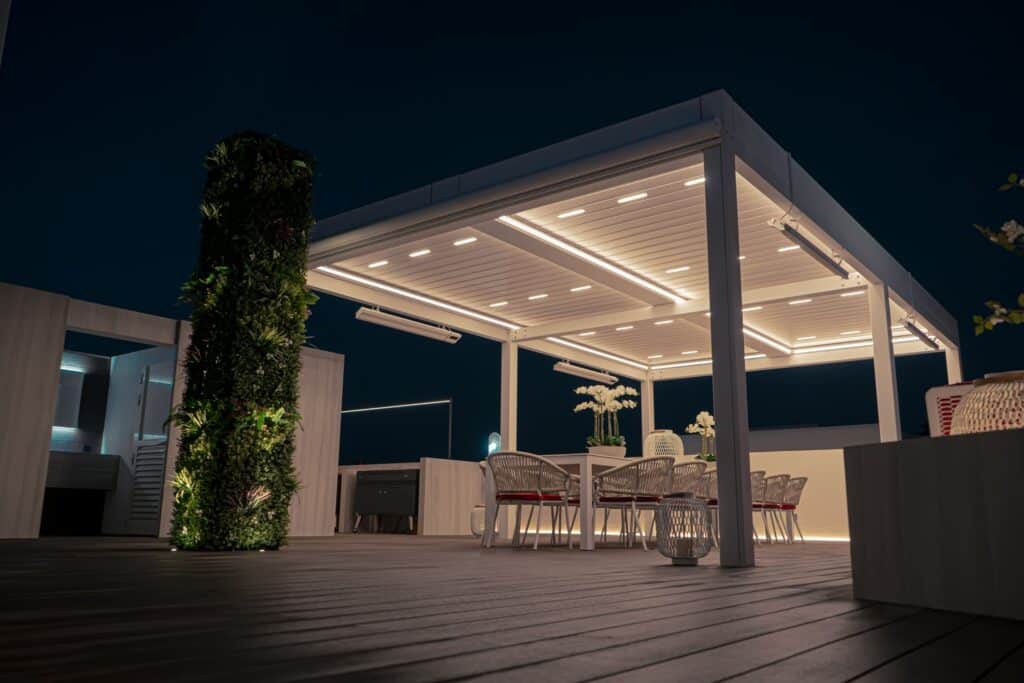
Fixed pergolas feature a permanent roof that provides continuous shade and protection. They are ideal for rooftop areas where consistent coverage is required, such as outdoor seating areas, walkways, or spaces that do not require adjustable sunlight or ventilation.
3. Drainage Planning
One of the most critical aspects of rooftop installations is drainage.
A well-designed pergola should include an integrated drainage system that efficiently channels rainwater away from the roof structure.
Proper drainage planning helps prevent:
- Water accumulation
- Roof damage
- Water leakage
- Long-term maintenance issues
4. Material Quality
Rooftop pergolas are constantly exposed to:
- Strong UV radiation
- High temperatures
- Humidity
- Coastal conditions in some locations
For long-term durability, Qualicoat-certified aluminum is highly recommended due to its:
- Excellent corrosion resistance
- High-quality powder coating
- Long service life
- Minimal maintenance requirements
5. Orientation and Sun Path
Understanding how sunlight moves across the rooftop is important when positioning a pergola.
The installation should be considered:
- Direction of sunrise and sunset
- Peak afternoon sunlight
- Desired shaded areas
- Views from the rooftop
Proper orientation improves comfort and maximizes the effectiveness of the shading system.
6. Space Planning and Functionality
Before installation, determine how the rooftop will be used.
Common applications include:
- Outdoor dining
- Lounge areas
- Swimming pool terraces
- Rooftop cafés
- Hotel lounges
- Outdoor gyms
- Event spaces
The intended use influences the pergola size, layout, and additional features.
7. Lighting and Additional Features
Modern rooftop pergolas can be enhanced with features such as:
- Integrated LED lighting
- Sliding or vertical moving glass systems
- Smart controls
- Wind, rain, and sun sensors
- Audio and entertainment systems
These additions improve usability while creating a premium outdoor experience.
8. Professional Installation
Even the highest-quality pergola system depends on correct installation.
Professional installers assure:
- Accurate alignment
- Secure anchoring
- Proper drainage connections
- Smooth system operation
- Compliance with structural requirements
Experienced installation teams also help minimize future maintenance issues.
9.Local Regulations and Approvals
Depending on the property location, rooftop pergolas may require approvals from:
- Local municipalities
- Community developers
- Building management
- Property owners’ associations
Checking approval requirements before starting the project helps avoid delays and ensures compliance with applicable regulations.
Why Motorized Pergolas Are Popular for Rooftops
Motorized pergolas have become a preferred choice for rooftop projects because they offer flexibility that fixed structures cannot.
During the hot summer months, the roof can be adjusted to provide comfortable shade. In the cooler winter season, homeowners and guests can open the roof to enjoy natural sunlight, fresh air, and unobstructed sky views.
This ability to adapt to changing weather conditions makes motorized pergolas ideal for rooftops used throughout the year.
Final Thoughts
A rooftop pergola is much more than an outdoor shading structure. It is an investment in creating a comfortable, functional, and visually appealing outdoor environment.
By considering structural capacity, wind resistance, drainage, material quality, pergola type, and professional installation, homeowners, architects, and developers can ensure a rooftop shading solution that performs reliably for years to come.
Whether for a villa, hotel, restaurant, café, or commercial building, a well-engineered rooftop pergola transforms unused rooftop space into a premium destination that can be enjoyed in every season.